
Did you know that telehealth visits grew by a staggering 175% in 2020 compared to the previous year? The COVID-19 pandemic has accelerated the adoption of telemedicine, revolutionizing the way healthcare is delivered. This shift has been made possible through the integration of IPTV, or Internet Protocol Television, technology in healthcare settings.
Key Takeaways:
- IPTV has played a significant role in the rapid growth of telehealth during the COVID-19 pandemic.
- Telemedicine offers the convenience of virtual consultations, improving healthcare access for patients.
- IPTV enhances patient education and engagement through interactive video streaming and medical content.
- Telemedicine, powered by IPTV, has the potential to transform the healthcare landscape and improve patient outcomes.
- Healthcare providers and patients can leverage the benefits of IPTV technology for virtual care and health communication.
The Rise of Telehealth during the COVID-19 Pandemic
Telehealth utilization witnessed a remarkable surge during the COVID-19 pandemic, with telehealth visits soaring by 175% in 2020 compared to the previous year. This surge can be attributed to the combination of increased demand for healthcare, regulatory changes, and advancements in technology. Telehealth, also known as telemedicine, has revolutionized healthcare delivery by enabling virtual consultations, thus providing convenient and remote healthcare access to patients.
The COVID-19 pandemic forced healthcare providers to quickly adapt to new ways of delivering care while minimizing in-person visits to mitigate the spread of the virus. Telehealth emerged as a crucial solution, offering a safe and efficient alternative to traditional face-to-face consultations. Through telehealth, patients can consult with healthcare professionals from the comfort of their homes, eliminating the need for travel and reducing exposure to potential infections.
Virtual consultations through telehealth have proven to be beneficial for patients in various ways. Firstly, telehealth offers unparalleled convenience, allowing patients to schedule appointments at their convenience without the need to visit a healthcare facility. This flexibility is particularly valuable for individuals with mobility issues, those residing in rural or remote areas, or those with limited access to transportation.
Secondly, telehealth saves patients significant time and effort. Instead of spending hours in traffic or waiting rooms, patients can receive the necessary care from the comfort of their homes or workplaces. This time-saving aspect is particularly beneficial for individuals with busy schedules, working professionals, and caregivers who need to balance their responsibilities.
Furthermore, telehealth consultations often come at a reduced cost for patients. By eliminating travel expenses and reducing the overall time spent on healthcare visits, telehealth can result in cost savings. Additionally, some insurance providers have expanded their coverage to include virtual consultations, making telehealth a more financially accessible option for many.
The rise of telehealth during the pandemic has also prompted regulatory changes to facilitate its widespread adoption. Healthcare authorities and policymakers have adjusted regulations to enable healthcare providers to offer telehealth services more easily. This includes changes in reimbursement policies, licensing requirements, and privacy regulations. These regulatory changes have further accelerated the adoption of telehealth, ensuring that patients receive efficient and secure care.
Telehealth is not just a temporary solution but has the potential to become a permanent and integral part of the healthcare system. The increased utilization and positive patient experiences have demonstrated the benefits of virtual consultations, leading to a paradigm shift in healthcare delivery. As technology continues to advance and more healthcare providers embrace telehealth, it holds the promise of providing accessible and convenient healthcare to patients worldwide.
With the continued growth of telehealth, the healthcare industry is undergoing a revolution that prioritizes remote healthcare access, improved patient outcomes, and enhanced healthcare delivery.

Benefits of Telehealth during the COVID-19 Pandemic
- Convenience and flexibility for patients
- Time and cost savings
- Reduced exposure to potential infections
- Expanded access to healthcare, especially for rural and remote areas
- Regulatory changes facilitating widespread adoption
Table: Comparison of In-Person Visits and Telehealth Consultations
| Comparison | In-Person Visits | Telehealth Consultations |
|---|---|---|
| Time spent | Significant travel and waiting time | Convenience from any location |
| Cost | Transportation expenses and potential time off work | Reduced travel costs and potential work time saved |
| Exposure to infections | Potential exposure in waiting rooms or during travel | Reduced risk of exposure, especially during a pandemic |
| Accessibility | Challenges for rural or remote areas | Expanded access for underserved populations |
Challenges and Opportunities in Telehealth
While telehealth offers numerous advantages, there are both challenges and opportunities to consider in its implementation.
The Digital Divide: Access to Care
The digital divide poses a significant barrier in telehealth adoption, particularly for individuals lacking necessary technology or internet connectivity. This divide disproportionately affects underserved populations and rural areas, limiting their access to virtual healthcare services. To bridge this gap, initiatives are being developed to provide affordable internet access and technology to ensure equal healthcare opportunities for all.
Data Privacy and Security
Data privacy and security are crucial considerations in virtual healthcare settings. The storage, transmission, and protection of personal health information (PHI) require robust measures to maintain patient confidentiality and prevent unauthorized access. Telehealth platforms must comply with strict data privacy regulations, implement encryption methods, and prioritize patient consent to maintain trust and ensure the safe exchange of sensitive medical information.
Reimbursement and Regulatory Challenges
Telehealth reimbursement and regulatory policies vary across jurisdictions, posing challenges for healthcare providers. Establishing fair reimbursement models that adequately compensate telehealth services is important to ensure the sustainability of these virtual care options. Additionally, streamlining regulatory processes to remove unnecessary barriers can promote efficient telehealth adoption while maintaining patient safety and quality of care.
Opportunities in Telehealth
Despite the challenges, telehealth presents substantial opportunities to transform healthcare delivery:
- Improved Access to Care: Telehealth eliminates geographic limitations, giving patients access to specialized care and medical expertise regardless of their location. Remote consultations and remote monitoring enable patients to receive quality healthcare services conveniently and efficiently.
- Enhanced Patient Engagement: Telehealth provides opportunities for remote patient engagement and education. Through telehealth platforms, patients can access educational resources, participate in virtual support groups, and engage in remote monitoring programs, fostering active involvement in their own healthcare management.
- Reduced Healthcare Costs: Telehealth has the potential to reduce healthcare costs by minimizing the need for in-person visits, avoiding travel expenses, and reducing hospital readmissions through remote patient monitoring. By leveraging telehealth solutions, healthcare systems can optimize resource allocation and improve overall cost-efficiency.
Fiber Optics in Medical Procedures
Fiber optics has revolutionized medical procedures, especially in the field of endoscopy. With the use of fiber-optic endoscopes, doctors can obtain clear and detailed views of internal organs, improving diagnostic accuracy and expediting patient recovery times.
One of the key advantages of fiber-optic endoscopes is their ability to transmit light through flexible optical fibers, allowing for direct visualization of areas that were previously difficult to access. This technology enables doctors to perform diagnostic procedures with surgical precision, leading to more accurate diagnoses and targeted treatment plans.
The integration of fiber optics has also significantly advanced minimally invasive surgeries, such as laparoscopy and arthroscopy. These procedures involve small incisions and the insertion of fiber-optic instruments, reducing tissue damage and promoting faster recovery times compared to traditional open surgeries. Not only do patients experience less pain and scarring, but they also enjoy shorter hospital stays and quicker return to normal activities.
Furthermore, fiber optics has played a pivotal role in the fields of neurosurgery and spinal operations. By providing surgeons with enhanced visibility and precise guidance during intricate procedures, fiber optic tools have improved surgical outcomes and patient safety in delicate surgical environments.
The Benefits of Fiber Optics in Medical Procedures:
- Clear and detailed visualization of internal organs
- Promotion of surgical precision
- Minimally invasive surgeries with reduced tissue damage
- Faster recovery times
- Improved surgical outcomes in neurosurgery and spinal operations
Overall, fiber optics has transformed the landscape of medical procedures, empowering healthcare professionals to deliver more accurate diagnoses and perform surgeries with greater precision. As fiber optic technology continues to advance, we can anticipate further enhancements in medical procedures, ultimately improving patient care and outcomes.
Innovations in Biomedical Research with Fiber Optics
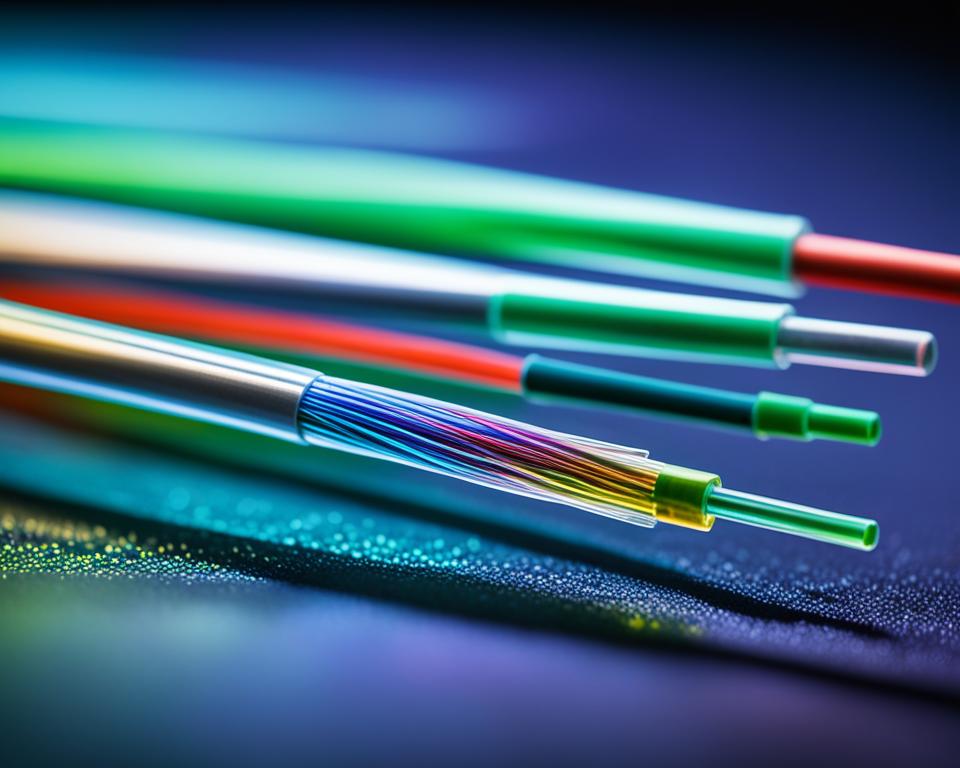
Fiber optics has revolutionized biomedical research, enabling advanced imaging techniques that have transformed our understanding of cellular structures and interactions. One such technique is confocal microscopy, which relies on fiber optic technology to capture high-resolution images of cells and tissues.
Confocal microscopy allows researchers to study the intricate details of cellular structures, facilitating breakthroughs in fields like oncology and neurobiology. By visualizing cellular processes and interactions in real-time, scientists can unravel the complexities of diseases and develop innovative treatments and therapies.
The use of fiber optics in biomedical research has had a significant impact in oncology. Researchers can now study cancer cells in unprecedented detail, observing their behavior and identifying potential targets for drug development. Fiber optics has also advanced neurobiology research, enabling scientists to explore the intricate wiring of the brain and investigate neurological disorders.
The Role of Fiber Optics in Biomedical Research
Fiber optics provides several advantages over traditional imaging techniques, making it an invaluable tool in biomedical research:
- High-resolution imaging: Fiber optic-based imaging techniques offer superb resolution, allowing researchers to observe cellular structures with incredible detail.
- Real-time imaging: Fiber optics enables real-time imaging, providing researchers with the ability to capture dynamic cellular processes and interactions.
- Non-invasive imaging: Fiber optic probes can be inserted into living tissues without causing significant damage, allowing for non-invasive imaging of internal cellular structures.
- Improved signal-to-noise ratio: Fiber optics minimizes signal loss and interference, resulting in cleaner and more accurate imaging.
By leveraging the power of fiber optics, biomedical researchers can gain unprecedented insights into cellular mechanisms and advance our knowledge of human health and diseases.
Fiber Optics in Oncology Research
Oncology research benefits greatly from fiber optic-based imaging techniques. The ability to visualize cancer cells at a cellular level provides valuable information on tumor growth, metastasis, and potential treatment targets.
With confocal microscopy, researchers can study in real-time how cancer cells respond to various treatments, enabling the development of more effective therapies. By understanding the cellular processes involved in cancer progression, scientists can devise targeted interventions to halt tumor growth and improve patient outcomes.
Table: Advances in Oncology Research Enabled by Fiber Optics
| Application | Advancement |
|---|---|
| Target identification | Fiber optic imaging aids in the identification of specific molecules and pathways involved in cancer growth, facilitating the development of targeted therapies. |
| Tumor microenvironment | Confocal microscopy allows researchers to investigate the complex interactions between cancer cells and their surrounding microenvironment, uncovering potential vulnerabilities. |
| Drug delivery | Fiber optics enables the visualization of drug uptake and distribution within tumors, guiding the development of delivery strategies for enhanced efficacy. |
Fiber Optics in Neurobiology Research
Neurobiology research has also been revolutionized by fiber optic-based techniques. By visualizing neuronal activity and connectivity, scientists can gain a deeper understanding of brain function and neurological disorders.
Confocal microscopy combined with fiber optics allows researchers to study the intricate networks of neurons, examine synaptic connections, and investigate the mechanisms underlying learning and memory. This knowledge is crucial in the development of treatments for neurological conditions such as Alzheimer’s disease, Parkinson’s disease, and epilepsy.
Table: Applications of Fiber Optics in Neurobiology Research
| Application | Advancement |
|---|---|
| Neuronal imaging | Fiber optic-based imaging techniques provide detailed visualization of neuronal structure and function, aiding in the study of brain circuitry. |
| Neuronal activity | Fiber optics enables the monitoring of neuronal activity in real-time, offering insights into brain processes and responses to stimuli. |
| Neurological disorders | By studying neuronal connectivity and activity patterns, researchers can unravel the mechanisms underlying neurological disorders and develop targeted therapies. |
Fiber optics has opened up new possibilities in biomedical research, allowing scientists to explore cellular structures, unravel disease mechanisms, and develop innovative treatments. As technology continues to advance, fiber optic-based imaging techniques will continue to drive breakthroughs in oncology, neurobiology, and beyond.
Telemedicine and Remote Diagnostics Enabled by Fiber Optics
Fiber optics has revolutionized the field of telemedicine by enabling medical professionals to provide remote consultations and diagnostics with efficiency and precision. Through fiber optic technology, high-speed data transmission allows for real-time communication, bringing healthcare expertise to patients who may be located in rural or underserved areas.
With the advent of telemedicine, patients in remote locations can now access specialized medical care without the need to travel long distances. Through video conferencing and high-definition imaging, doctors can remotely examine patients, provide diagnoses, and recommend treatment plans. This access to care is particularly crucial for individuals in rural areas who may face challenges in accessing healthcare services.
Furthermore, fiber optic technology has enabled a groundbreaking advancement in the field of surgery – telesurgery. By utilizing high-speed and low-latency communication, surgeons can perform remote surgeries from significant distances, providing critical medical interventions without needing to be physically present in the operating room.
Benefits of Telemedicine and Remote Diagnostics:
- Improved Access to Specialized Care: Patients in rural and underserved areas gain access to specialized healthcare services regardless of their geographical location.
- Convenience and Time Efficiency: Telemedicine eliminates the need for patients to travel long distances for consultations, saving time and reducing logistical challenges.
- Reduced Healthcare Costs: Remote diagnostics can help reduce healthcare costs by eliminating the need for unnecessary in-person visits and optimizing resource utilization.
- Enhanced Patient Outcomes: Timely diagnosis and treatment through telemedicine contribute to improved patient outcomes, especially in emergency or time-sensitive situations.
- Efficient Healthcare Delivery: Telemedicine enhances the efficiency of healthcare delivery by allowing healthcare providers to remotely engage with patients, reducing wait times and increasing patient satisfaction.
Telemedicine and remote diagnostics, enabled by fiber optic technology, have transformed the way healthcare is delivered, making quality medical care accessible to individuals regardless of their location. The possibilities presented by fiber optics for telehealth continue to drive advancements in healthcare and contribute to the improvement of patient outcomes.
The Critical Link of Fiber Optic Internet in Healthcare
Fiber optic internet plays a crucial role in data-intensive healthcare settings. Its high-speed connectivity enables healthcare providers to efficiently transfer and access large datasets used in radiology and genomics. This accelerated data transmission is particularly significant in fields such as radiology, where medical images like MRI and CT scans are large files that need to be sent and analyzed quickly.
With fiber optic internet, healthcare professionals can send these scans in seconds, reducing the time it takes to diagnose and plan treatments for patients. This high-speed connectivity ensures that healthcare providers can access and discuss critical patient information without delay, ultimately improving patient outcomes.
Additionally, fiber optic internet supports the Internet of Medical Things (IoMT) by enabling continuous patient monitoring and personalized care through wearable devices. These devices transmit real-time data, including vital signs and health metrics, to healthcare providers. This real-time data allows for early detection of potential health issues, timely interventions, and proactive management of chronic conditions.
By leveraging fiber optic internet, healthcare providers can harness the full potential of data-intensive technologies and applications, such as remote patient monitoring and telemedicine. The combination of high-speed connectivity and advanced healthcare solutions empowers healthcare professionals to deliver efficient, effective, and personalized care to their patients.
Fiber Optics: Enhancing Patient Care and Well-being
Fiber optics technology not only enables the seamless transfer of data but also plays a vital role in enhancing patient care and well-being. Its high-speed connectivity and reliability have paved the way for transformative advancements in healthcare, particularly in the realm of telehealth.
Effective Telehealth Consultations
With the help of fiber optics, telehealth consultations have become more efficient and effective than ever before. Healthcare providers can now offer real-time advice and care to patients remotely, bridging the gap between doctors and individuals in need, regardless of distance. This is especially crucial in emergencies or for patients with limited mobility, as they can receive immediate medical attention without the need for physical visits.
By leveraging the power of fiber optics, telehealth consultations provide a level of convenience and accessibility that was previously unimaginable. Patients can seek medical advice, discuss their concerns, and receive expert guidance in real-time, all from the comfort of their own homes. This not only saves valuable time but also reduces the burden on healthcare facilities, allowing medical professionals to focus on critical cases.
Empowering the Internet of Medical Things (IoMT)
The Internet of Medical Things (IoMT) is revolutionizing healthcare by connecting medical devices and enabling continuous patient monitoring. Fiber optics technology serves as a critical link in IoMT, facilitating the seamless transmission of real-time data from various connected devices to healthcare providers.
Through fiber optics, connected medical devices can monitor patient vitals, collect health data, and transmit it securely to healthcare professionals. This continuous monitoring allows for early detection of potential complications, timely interventions, and improved patient outcomes. For example, wearable devices equipped with fiber optics can track vital signs, such as heart rate and blood pressure, alerting healthcare providers to any deviations from normal ranges.
Enhanced Emergency Care
In emergency situations, every second counts. Fiber optics technology enables rapid communication between medical professionals and emergency response teams, leading to faster response times and more efficient emergency care.
With fiber optics, emergency medical personnel can access real-time data, including patient history, medical records, and critical health information, even before arriving at the scene. This seamless flow of information allows for better-informed decision-making, personalized care, and improved patient outcomes.
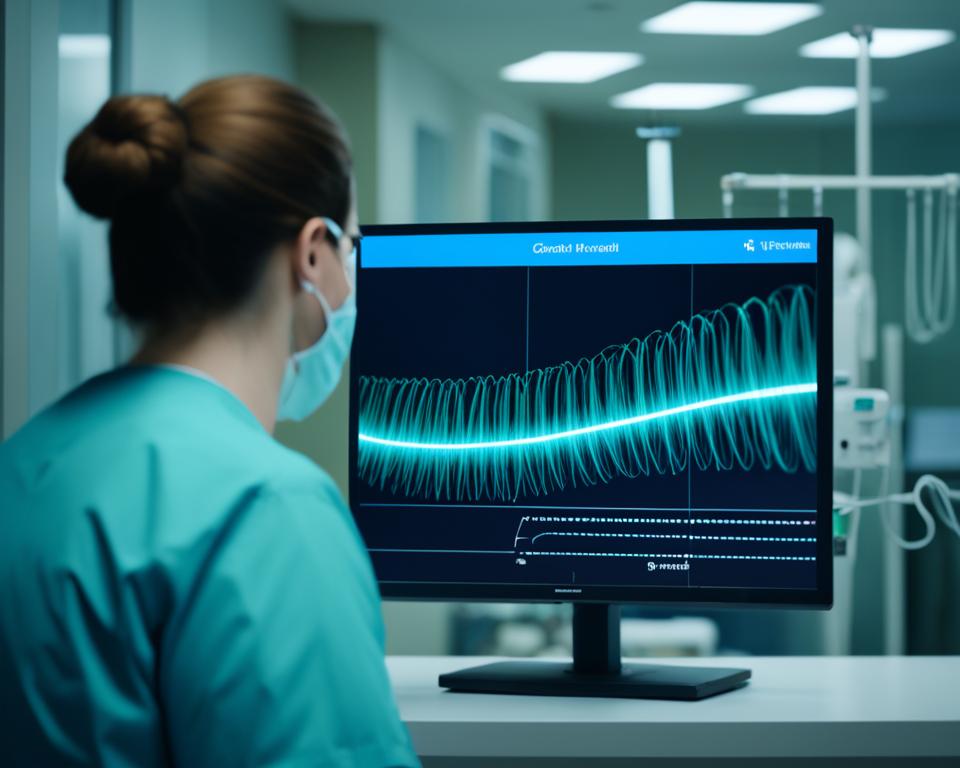
Image: Fiber optics facilitating enhanced patient care and well-being.
Overall, fiber optics technology plays a vital role in enhancing patient care and well-being by enabling effective telehealth consultations, empowering the Internet of Medical Things (IoMT), and facilitating enhanced emergency care. With its ability to provide high-speed connectivity and real-time data transmission, fiber optics is driving innovative solutions that improve healthcare accessibility, quality, and patient outcomes.
The Transformative Role of Fiber Optics in Healthcare
Fiber optics plays a transformative role in revolutionizing healthcare, driving innovation and improving patient-centered care. With its integration into various medical procedures and research, fiber optics has paved the way for precision medicine and improved healthcare outcomes.
Advancing Surgical Precision
In the field of surgery, fiber optics has revolutionized procedures by enabling enhanced precision. Surgeons can now perform minimally invasive surgeries, such as laparoscopy and arthroscopy, with greater accuracy and reduced tissue damage. Fiber optic tools provide surgeons with clear and detailed views, allowing them to navigate delicate surgical environments with improved precision.
Empowering Remote Diagnostics
Remote diagnostics have become increasingly accessible, thanks to fiber optics. The high-speed data transmission capabilities of fiber optic technology enable healthcare professionals to conduct remote consultations and provide accurate diagnoses. This is particularly beneficial for patients in rural areas who may have limited access to specialized medical care.
Driving Innovation in Medical Research
Fiber optics has opened new avenues for biomedical research, contributing to advancements in healthcare technology. Advanced imaging techniques, such as confocal microscopy, harness the power of fiber optics to provide high-resolution images of cellular structures. This breakthrough technology has significantly contributed to fields like oncology and neurobiology, leading to the development of innovative treatments and therapies.
Enhancing Patient-Centered Care
Patient-centered care is at the heart of modern healthcare, and fiber optics plays a vital role in delivering personalized and efficient care to patients. Through telemedicine enabled by fiber optic technology, healthcare providers can engage with patients remotely, offering real-time advice and reducing the need for in-person visits. Continuous patient monitoring through the Internet of Medical Things (IoMT) further enhances patient-centered care by enabling healthcare professionals to intervene early and provide proactive interventions.
Improved Outcomes through Fiber Optics
The integration of fiber optics into healthcare has led to improved patient outcomes through various means. By facilitating precision medicine, fiber optics enables tailored treatments that are specifically designed to meet the unique needs of individual patients. Additionally, the use of fiber optics in surgical procedures and diagnostics results in reduced tissue damage and faster recovery, ultimately improving patient outcomes and overall satisfaction.
Fiber Optics in Healthcare: A Complete Table
| Applications | Benefits |
|---|---|
| Surgical Procedures | – Enhanced surgical precision – Minimally invasive surgeries – Reduced tissue damage |
| Remote Diagnostics | – Improved access to specialized care – Efficient remote consultations – Accurate diagnoses |
| Biomedical Research | – Advanced imaging techniques – High-resolution cellular imaging – Innovations in treatments and therapies |
| Patient-Centered Care | – Real-time advice and care – Continuous patient monitoring – Proactive interventions |
| Improved Outcomes | – Precision medicine – Reduced tissue damage and faster recovery – Enhanced patient satisfaction |
Conclusion
The combination of IPTV and healthcare has revolutionized telemedicine, improving access to care and enhancing patient education. With the advancements in fiber optics and high-speed connectivity, telehealth has become a significant component of healthcare, offering convenience and remote consultations from the comfort of one’s home. The integration of video streaming technology has paved the way for interactive patient education, empowering individuals to take an active role in their own healthcare journey. This transformative approach has led to improved healthcare outcomes and a more patient-centered healthcare landscape.
By leveraging IPTV and healthcare technology, healthcare providers can deliver personalized care, ensuring that patients have the resources and information they need to make informed decisions about their health. Through video streaming, patients can access educational content that helps them understand their conditions, treatment options, and preventive measures. Additionally, telemedicine allows for remote consultations, reducing barriers to care for individuals in underserved areas or with limited mobility. This combination of technology and healthcare promotes inclusivity and improves healthcare equity.
The integration of IPTV and healthcare not only enhances patient education and access to care but also streamlines healthcare operations. Through telemedicine, healthcare providers can optimize their workflows, improve operational efficiency, and reduce costs. Telehealth also enables remote monitoring and the collection of real-time data, facilitating proactive healthcare interventions and preventive measures. Furthermore, the use of video streaming technology in telemedicine enables secure and convenient communication between patients and healthcare professionals, ensuring high-quality virtual care.
In conclusion, the synergy between IPTV and healthcare technology has transformed telemedicine, empowering patients and healthcare providers alike. With the support of fiber optics and high-speed connectivity, telehealth has revolutionized healthcare access, patient education, and healthcare delivery. The integration of video streaming technology has enhanced patient engagement and enabled remote consultations, ultimately leading to improved healthcare outcomes and a more patient-centered approach to care. As technology continues to advance, the possibilities for IPTV in healthcare are endless, promising a future of innovative solutions and improved healthcare experiences for all.
FAQ
How can IPTV revolutionize telemedicine?
What was the impact of COVID-19 on telehealth?
What are the challenges and opportunities in telehealth?
How has fiber optics revolutionized medical procedures?
How has fiber optics contributed to biomedical research?
How has fiber optics enabled telemedicine and remote diagnostics?
What is the role of fiber optic internet in data-intensive healthcare settings?
How does fiber optics enhance patient care and well-being?
What is the transformative role of fiber optics in healthcare?
How does the combination of IPTV and healthcare revolutionize telemedicine?