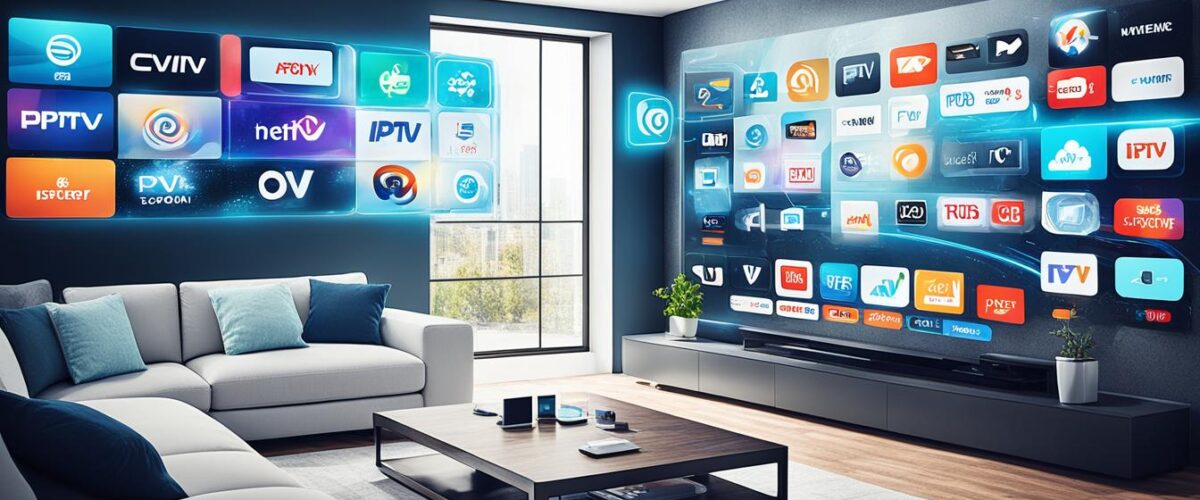
Internet Protocol Television (IPTV) has changed the way we watch TV. It has matched our different tastes and the growth of streaming platforms. Now, with IPTV, we can watch what we want, when we want. This is a huge shift in how TV content is delivered to us.
Key Takeaways:
- IPTV has transformed the television industry by reshaping viewer preferences and offering personalized viewing experiences.
- The rise of streaming services has contributed to the popularity of IPTV, providing on-demand content and flexibility in viewing habits.
- IPTV utilizes internet protocol technology for digital content delivery, offering a seamless multimedia streaming experience.
- OTT platforms have embraced IPTV, enabling viewers to access a wide range of subscription-based and ad-supported services.
- The future of IPTV holds exciting possibilities with advancements in higher resolutions, AI integration, virtual reality, and 5G networks.
The Genesis of IPTV: Pioneering the Future of Television
IPTV started when TV and the internet came together in the late 20th century. It was made possible by fast internet connections. This change meant a new way to watch TV and brought new entertainment options.
IPTV uses the internet to send TV shows through broadband networks. This made TV and the internet work together smoothly. It marked the start of a big change in how we watch TV.
Viewers now get more than just TV channels with IPTV. They can watch videos when they want, plus enjoy extra features. Moving from cable and satellite TV, this shift has changed TV for content makers and watchers alike.
Fast internet and a desire for personalized content are why IPTV is growing. Now, millions choose IPTV as their go-to way to watch shows and movies. They can watch on lots of different devices.
Table: Evolution of Television Technology
| Traditional TV | IPTV |
|---|---|
| Limited channel selection | Wide range of channels and content options |
| Fixed broadcast schedule | On-demand viewing and personalized schedules |
| No interactive features | Interactive features, such as live chat and social media integration |
| Dependence on cable or satellite providers | Delivered over broadband internet, bypassing traditional providers |
IPTV changed how we see TV and movies forever. And it’s just the beginning. As tech gets better, so will our TV-watching experiences thanks to IPTV.
Early Challenges and Innovations: Navigating the Road to Mainstream Adoption
In its early days, IPTV had to face several hurdles. These hurdles needed overcoming to become a common choice. Challenges included bandwidth issues, making devices work together, following regulations, and constantly finding new ways to improve.
The Challenge of Limited Bandwidth
At first, IPTV struggled with the amount of internet it needed. Sending high-quality videos and sound over the web used a lot of internet space. But, as internet tech grew, with faster speeds, this problem got smaller. Now, with the good internet everywhere, not having enough space is rare.

Interoperability Issues in the Early Days
Getting different IPTV gadgets and services to work together was hard early on. This was because everyone made things their own way. So, your favorite show on one device might not play on another. To fix this, groups set common rules. This made it smooth for different IPTV things to talk to each other without trouble.
Regulatory Hurdles and Compliance
Using the internet for TV made old rules and new tech clash. How TV rules applied to the internet got confusing. But, smart minds made new rules just for internet TV. This made sure everything followed the law. These new rules helped IPTV grow.
Innovation as the Key to Success
Overcoming challenges with new ideas pushed IPTV forward. Better ways to compress videos, use networks, and send content made it all work well. Plus, people making shows and movies found cool new ways to do things. This made watching TV online more fun and personal for everyone.

The Rise of On-Demand and Personalized Viewing Experiences
IPTV stands out for its on-demand and personalized viewing. This lets viewers watch what they want whenever they want. It brings control and ease to the way we enjoy shows and movies.
With IPTV, you can watch your favorite shows and movies when it suits you. You just need to click to see what’s available. This means you’re not tied to watch at set times, making TV and movie watching much more flexible.
IPTV also lets you make your own watchlist. It uses special tech to pick shows and movies you might like. This makes your watching experience unique. You get to see things you really enjoy.
Streaming with IPTV is smooth and clear. As long as your internet is good, you’ll get top-quality video and sound. Plus, you can watch on various devices. This means you’re not locked into watching on just one screen.
To sum up, on-demand and personal watching has changed how we enjoy entertainment. IPTV’s flexible and personalized nature makes it better than ever to watch. It’s making its mark as the best way to watch shows and movies.
Mainstream Adoption and Market Disruption: Redefining the Television Landscape
In the last ten years, IPTV has gone from a niche product to a common way of watching TV. It’s been picked up by big telecom companies, cable providers, and over-the-top (OTT) services.
Telecoms are adding IPTV to their packages, along with internet and phone services. This move brings all these services together, making things simpler for customers. It also keeps old customers happy and attracts new ones.
Cable companies, too, see the value of adding IPTV. They know they need to change their old ways because of new tech and how people prefer to watch TV now. With IPTV, they can offer more shows and movies, as well as new features like watching things whenever you want.
OTT services, like Netflix and Hulu, are also big in the IPTV world. They stream shows and movies online, cutting out the need for traditional providers. These services let viewers watch what they want, when they want, and where they want.
Many people now use smart TVs and devices to watch IPTV. This makes it super easy to find and enjoy all kinds of shows. You can get into a new show or movie with just a click or tap.
IPTV Providers
| Telecommunications Companies | Cable Operators | OTT Providers |
|---|---|---|
| AT&T U-verse | Comcast Xfinity | Netflix |
| Verizon Fios | Spectrum TV | Hulu |
| BT TV | DirecTV | Amazon Prime Video |
| Orange TV | DISH Network | Sling TV |
IPTV is truly changing how we watch TV. This change in the TV world is happening on a big scale. Telecoms, cable companies, and OTT services are all using IPTV to change the game. We’re all watching TV in new and exciting ways because of it.
The Future of IPTV: Embracing Innovation and Digital Transformation
IPTV is changing fast, thanks to new streaming tech. It’s making TV more personal and engaging than ever before. High-resolution displays, such as 4K and 8K, are here. They make shows and movies clearer and more detailed.
Artificial intelligence (AI) is also part of the new IPTV scene. It uses algorithms to suggest shows based on what you like. This makes watching TV a lot more tailored to your own taste.
Now, IPTV is mixing with virtual reality (VR). Viewers can jump into a virtual world to watch their favorite shows. This lets you feel like you’re part of the story.
But there’s more to come with IPTV, especially in how we connect. The arrival of 5G will change everything. It means no more waiting for videos to load. With 5G, streaming TV will be super smooth.
Here’s a quick look at key tech trends:
| Technology | Impact on IPTV |
|---|---|
| 4K and 8K | Higher resolutions for a more immersive viewing experience |
| AI | Personalized content recommendations and enhanced user engagement |
| VR | Immersive and interactive entertainment experiences |
| 5G | Faster and more reliable connectivity for seamless streaming |
All these new techs are changing the game for IPTV. As we want more personalized content, IPTV keeps getting better. It’s the start of a new era where TV is more interactive and engaging.
Embracing the IPTV Revolution
The story of IPTV shows how much the TV world has changed. IPTV stands for Internet Protocol Television. It’s changed how we watch, choose, and enjoy TV. It brought new choices and ways to control our TV fun, breaking old boundaries.
IPTV has changed the way we watch shows and movies. Now, people can watch what they love on services like Netflix, Hulu, and Amazon Prime Video. They can do it anytime, anywhere. This personal touch has reshaped how we enjoy TV and movies.
Being connected is key in the IPTV world. The internet lets us stream shows on many devices like smart TVs, phones, and tablets. This setup lets people enjoy shows whenever they like. No more waiting for TV schedules.
IPTV makes watching TV more fun with interactive content and personal suggestions. People can do more than just watch. They can click on menus, use viewing guides, and watch interactive ads. This makes finding new shows and movies exciting.
IPTV has changed the fun in watching TV. With on-demand shows, personal tips, and interactive bits, TV is better than ever. As IPTV joins with tech like 4K and 8K, AI, VR, and 5G, viewers can expect even cooler ways to watch TV.

To wrap it up, IPTV has opened a new chapter in TV. It has changed how we pick, connect, and enjoy TV. As tech grows and what viewers want changes, IPTV will lead the way in making TV more fun.
Understanding IPTV
IPTV means Internet Protocol Television. It’s a new way to watch TV or videos online. It’s different from cable or satellite because it lets users choose when and how to watch. This makes viewing more flexible within the network.
IPTV has gotten popular as streaming services grow. It’s great for people wanting a more personal TV experience. With IPTV, you can watch your favorite shows and movies anytime. This is something you can’t do with regular TV.
It’s not just about when you watch, but also how you watch. IPTV can be seen on smart TVs, computers, phones, and tablets. This gives viewers the freedom to enjoy their shows from anywhere with internet.
IPTV uses the internet to send content. It doesn’t rely on things like cables or satellites. This makes watching TV digitally smooth and fast.
Over time, IPTV has become a big part of TV with its on-demand and live options. Now, there are many services to pick from, offering a lot of shows and movies. This includes original programs you can’t watch anywhere else.
The Benefits of IPTV
IPTV brings many good things compared to regular TV:
- Watching whenever and however you want
- Having a lot of shows and movies ready to watch
- Using different devices to view
- Creating a personal way to watch TV
- Sending shows smoothly over the internet
So, IPTV is a different way to love TV. It mixes the ease of on-demand with classic channel watching. It’s ready for how we want to watch TV today and in the future.
Stay tuned for the next part. We’ll look at how IPTV really works. This includes things like getting shows on demand, watching things later, and live TV on IPTV.
IPTV Operational Mechanisms
IPTV works in three key ways: video on demand (VOD), time-shifted media, and live IPTV. Each way brings something special to how viewers enjoy their shows. They make watching TV more fun and fit into people’s lives better.
1. Video on Demand (VOD)
VOD lets viewers pick what to watch and when. With IPTV, you get access to a huge library of titles. From old movies to new TV shows, there’s something for everyone. This means you can watch what you like, when you like.
Popular streaming services like Netflix, Hulu, and Amazon Prime Video also use IPTV. They offer tons of shows and movies on demand. This technology helps with smooth streaming and high-quality shows.
2. Time-Shifted Media
Time-shifted media is great for not missing your favorite shows. With IPTV, you can watch old shows whenever you want. This saves you from having to watch when the show is actually on.
IPTV makes it easy to find and watch old episodes. You can watch what you missed without stress. This feature has really changed how we watch TV, making it simpler and more convenient.
3. Live IPTV
Live IPTV is for watching things as they happen. It lets you join in real-time with shows and events. This makes watching TV more engaging and fun. You can even participate in live conversations.
OTT platforms and IPTV give you both live TV and on-demand shows. This mix makes the IPTV experience richer. It caters to all kinds of TV watchers, offering many options.
| Operational Mechanisms | Features |
|---|---|
| Video on Demand (VOD) | – Access content at any time – Extensive library of movies and TV shows – Personalized viewing experience |
| Time-Shifted Media | – Watch previously aired content – Catch up on missed episodes – No need to adhere to specific broadcast schedules |
| Live IPTV | – Real-time streaming of shows and events – Interactive viewing experience – Stay connected to live television programming |
IPTV has changed how we watch TV for the better. Whether you like on-demand shows, want to catch up on episodes, or like live TV, it has something for you. This makes watching TV more personal and fun. IPTV fits into your lifestyle, making TV time better.
IPTV Services
IPTV services have changed how we watch TV. They offer many options for what and when to watch. This includes Video On Demand (VOD), shows you can pause and play (time-shifted media), and live broadcasts.
Netflix is well-loved for its huge collection of films, TV shows, and its own series. It’s easy to use and suggests things you might like, making it a top choice for quick watching.
Hulu is cool because it mixes on-demand and live streams. It has popular shows, sports, and news, providing a one-stop-shop for entertainment.
Amazon Prime Video comes with its Prime subscription. This gives users access to movies, shows, and special Amazon programs, attracting fans of all kinds of entertainment.
Sling TV is great for watching live channels anywhere. It lets users pick and choose from various channels, fitting individual needs and tastes.
These are just a few examples of what IPTV has to offer. Each service has its charms, with different shows, features, and prices. There’s something for everyone, depending on what you enjoy.
Comparison of IPTV Services
| Service | Key Features | Price |
|---|---|---|
| Netflix | Extensive library of on-demand content, personalized recommendations | Starting at $8.99/month |
| Hulu | Combination of on-demand content and live TV streaming | Starting at $5.99/month |
| Amazon Prime Video | Wide selection of movies, TV series, and exclusive Amazon Originals | Included with Amazon Prime membership ($12.99/month) |
| Sling TV | Live TV streaming, customizable channel packages | Starting at $35/month |
Signing up for services like Netflix, Hulu, Amazon Prime Video, or Sling TV means getting shows and movies you love. These platforms customize your experience to fit your tastes and schedule. IPTV makes watching TV more exciting and personal than ever.
Conclusion
IPTV is changing how we watch TV. It’s making entertainment better for everyone. With its easy access and custom viewing, it’s no surprise people love it. As TV moves ahead, IPTV will keep leading the way.
IPTV gives viewers lots of choices. You can watch what you love anytime, anywhere. This freedom to choose wasn’t possible with old TV. IPTV puts the control in your hands for a better entertainment experience.
For creators, IPTV opens new doors. They can share their stories with a global audience. Platforms like Netflix let them shine with quality content. IPTV is a bright spot for creatives in the TV world.
Technology will keep changing, and so will what we want from TV. IPTV is key to this future. It makes watching TV personal and fun. This tech is here for the long run, making TV better for us all.
FAQ
What is IPTV?
How does IPTV work?
What IPTV services are available?
How has IPTV reshaped the future of television?
What are the challenges IPTV faced in its early years?
What does the future of IPTV hold?